

Jordan R. Wagner | July 17, 2026 | Car Accidents
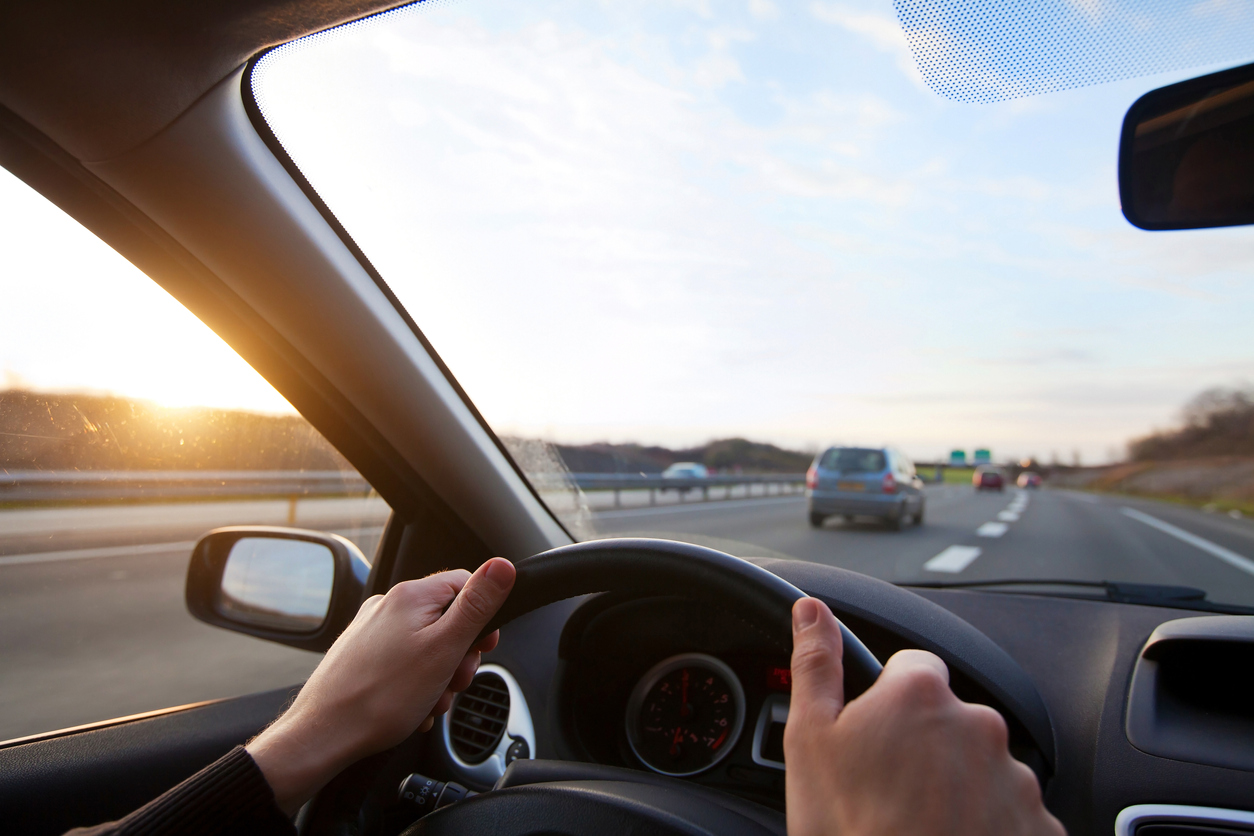
Adaptive cruise control (ACC) has become a standard feature on many newer vehicles, offering drivers added convenience during highway travel and heavy traffic. Unlike traditional cruise control, adaptive cruise control automatically adjusts your vehicle’s speed to maintain a safe distance from the car ahead.
While this technology can make driving easier, it isn’t foolproof. Drivers still need to pay close attention to the road and be prepared to react if traffic conditions change unexpectedly. Understanding how adaptive cruise control works and where it falls short can help you use it safely and reduce your risk of being involved in a crash.
How Does Adaptive Cruise Control Work?
Adaptive cruise control builds on traditional cruise control by using radar sensors, cameras, or other detection systems to monitor traffic ahead of your vehicle.
Once you set your desired speed, the system tracks the distance to the vehicle ahead of you. If traffic slows, your vehicle automatically reduces its speed to maintain a safe following distance. When the lane clears, the system gradually accelerates back to your preset speed.
Depending on the make and model of your vehicle, adaptive cruise control may also work alongside other driver assistance features, such as:
- Forward collision warning
- Automatic emergency braking
- Lane-centering assistance
- Stop-and-go traffic assistance
Although these features can enhance convenience, they do not relieve the driver of their responsibility to remain attentive.
Is Adaptive Cruise Control Actually Safer?
For many drivers, the answer is yes—when it’s used correctly.
Adaptive cruise control can help reduce driver fatigue on long trips and encourage drivers to maintain a safer following distance. These benefits may lower the risk of certain rear-end collisions, particularly in steady highway traffic.
However, adaptive cruise control has important limitations. The technology cannot anticipate every hazard or react as effectively as a focused human driver in every situation.
For example, the system may struggle to respond appropriately to:
- Vehicles that cut into your lane suddenly
- Pedestrians or cyclists entering the roadway
- Sharp curves
- Construction zones
- Heavy rain, fog, or snow
- Objects or debris in the road
Drivers should always keep their hands on the steering wheel, stay alert, and be prepared to brake or steer if necessary.
Can Adaptive Cruise Control Cause an Accident?
Adaptive cruise control itself does not usually cause an accident. Instead, crashes often happen when drivers place too much trust in the technology or fail to recognize its limitations.
Some situations that may contribute to an accident include:
- Becoming distracted while the system is engaged
- Assuming the vehicle will respond to every hazard automatically
- Malfunctioning sensors or cameras
- Software or equipment defects
- Poor weather that interferes with the system’s ability to detect other vehicles
- Reckless or negligent driving by another motorist
In many cases, several factors contribute to a collision rather than a single cause.
Who May Be Liable After an Adaptive Cruise Control Crash?
Determining who is responsible for an accident involving adaptive cruise control can be more complicated than a typical car crash.
Depending on the facts, liability may rest with:
- A driver who failed to operate the vehicle safely
- Another negligent motorist
- A vehicle manufacturer if a defective system contributed to the collision
- A manufacturer of defective parts or software
- A repair shop that improperly serviced the vehicle
Because these cases may involve advanced technology, investigators often review crash reports, witness statements, vehicle data, and information stored by the vehicle’s onboard systems.
Call Kibbey Wagner Injury & Car Accident Lawyers for a Free Consultation with a Stuart Car Accident Lawyer
Advanced safety technology has changed the way many people drive, but it cannot prevent every collision. Drivers must still stay focused behind the wheel, even when adaptive cruise control is engaged.
If you were injured in a crash involving a vehicle equipped with adaptive cruise control, the team at Kibbey Wagner Injury & Car Accident Lawyers is here to help. Contact an experienced Stuart car accident lawyer to arrange a free consultation.
For more information, please contact the Stuart, Port St. Lucie, or Palm Beach Gardens personal injury law firm of Kibbey Wagner Injury & Car Accident Lawyers to schedule a free consultation today.
We proudly serve Martin County, St. Lucie County, Palm Beach County, and its surrounding areas in Florida:
Kibbey Wagner Injury & Car Accident Lawyers Stuart
73 SW Flagler Ave
Stuart, FL 34994
(772) 444-7000
Kibbey Wagner Injury & Car Accident Lawyers Port St. Lucie
1100 SW St. Lucie West Blvd. Ste 208
Port St Lucie, FL 34986
(772) 247-3374
Kibbey Wagner Injury & Car Accident Lawyers Palm Beach Gardens
300 Ave of the Champions Ste 170
Palm Beach Gardens, FL 33418
(561) 944-4000